





The Case for Incremental Progress in Hair Restoration
Hair restoration is rarely a single, dramatic moment. For many patients the most reliable route to a natural, durable outcome is a sequence of measured improvements: careful assessment, targeted treatment, and controlled follow-up. That steady approach helps surgeons refine hairline design, manage donor resources and respond to each patient’s individual pattern of hair loss, so modest interventions add up to a convincingly natural result over time.
Staging change also suits the practical realities of life. People juggle work, travel and family commitments, so an approach that plans smaller procedures or combines surgical and non-surgical treatments can fit into a wider routine more easily than a single, large operation. Clinically led planning minimises surprises and lets clinicians tailor the pace of progress to a patient’s lifestyle and aesthetic goals.
When researching options, many people searching for the best hair transplant London will prioritise surgeon-led consultations, clinic accreditation and a clear explanation of how treatments can be staged to meet long-term goals in a realistic timeframe. Westminster Medical Group (WMG), a specialist hair restoration clinic based at 134 Harley Street, London, emphasises exactly this model: specialist consultations, individualised treatment plans and continuity of care throughout the journey.
Defining Small Improvements: What They Look Like Practically
Small improvements in hair restoration can take several forms. A conservatively placed frontal few grafts can restore the appearance of a youthful hairline without overburdening donor zones; a focused session to strengthen a thinning crown can deliver visually significant density in a single area; or scalp micropigmentation can be used as an interim visual aid while transplanted follicles take root. Non-surgical medical treatments often run alongside these procedures to slow ongoing loss and support thicker-looking hair, turning incremental clinical gains into more noticeable overall improvement.
These modest changes are carefully planned. Surgeons consider hair direction, angulation and grouping so that each graft contributes to an overall pattern that reads as natural. By prioritising the most visible zones first—usually the frontal third and temples—clinicians produce early, confidence-boosting results, then assess whether further sessions are required to add density elsewhere.
How Surgeon-Led Consultations Turn Minor Steps into a Plan
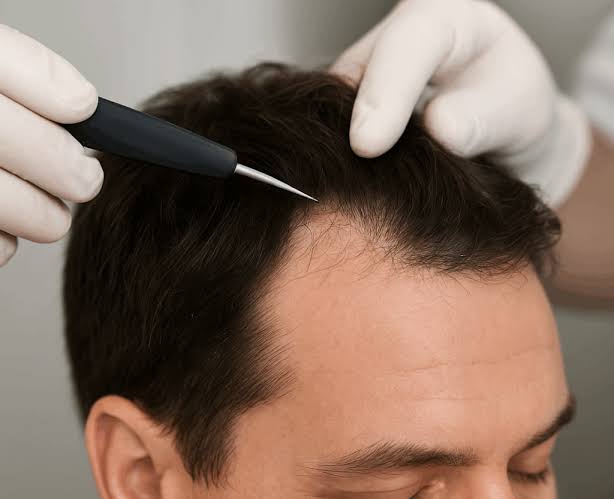
Surgeon-led consultations are central to turning incremental ideas into a coherent plan. An experienced specialist will assess hair loss pattern, donor hair quality and broader health factors, then propose a phased treatment schedule. That schedule might combine medical therapy, one or more FUE or FUT sessions, and finishing touches such as eyebrow refinement or scalp micropigmentation. Planning with a surgeon rather than a sales representative helps ensure each step is medically appropriate and aligned with long-term aesthetic aims.
Good consultations also clarify realistic timelines, review possible risks and set measurable objectives for each stage. Surgeons routinely document baseline photographs and discuss follow-up checkpoints, so that both clinician and patient can judge whether the next stage is needed, or whether a non-surgical adjunct would achieve the desired visual effect.
Technical Precision: Tools That Make Small Gains Count
Advances in technique and equipment allow clinicians to make subtle, high-value improvements. Follicular Unit Extraction (FUE) permits precise placement of individual follicles, which is ideal when the aim is to refine a hairline or add density in a defined zone. Where appropriate, repeat or staged FUE sessions can be used judiciously to build volume without exhausting donor supply. Complementary options such as scalp micropigmentation add immediate visual density and can reduce the need for extensive grafting in early stages.
Modern instrumentation, skilled graft handling and considered placement strategy improve graft survival and aesthetic harmony. Clinics that invest in training and technology—ranging from advanced extraction devices to meticulous graft storage protocols—are able to deliver incremental gains with predictability and minimal scarring, which is particularly important when multiple sessions are anticipated over time.
Everyday Choices That Support Clinical Progress
Between procedures there are simple, evidence-aligned habits that help sustain progress. Adhering to prescribed medical therapies, following post-operative care instructions and avoiding behaviours that impede healing are all important. Patients should expect initial transplant growth to become visible around three to six months, with further maturation through 12 to 18 months, so patience and consistent aftercare are essential. Small lifestyle adjustments — adequate sleep, moderate alcohol consumption, and gentle hair care — can contribute to better outcomes and make each clinical gain more durable.
Post-operative routines are practical and straightforward: protecting grafts in the immediate healing window, avoiding strenuous exercise while the scalp seals, and using recommended hair-care products to avoid irritation. Regular clinic check-ups allow the surgical team to monitor healing, support medication adherence and advise when it is appropriate to plan the next stage of treatment.
Financing and Scheduling for Gradual Improvement
Practical planning matters. Choosing a staged approach can spread cost and downtime, and many clinics offer finance options that make incremental treatment more accessible. Breaking a journey into distinct phases allows patients to fit procedures around work and travel, and to assess the aesthetic effect of each step before committing to further interventions. That measured approach often results in higher patient satisfaction because each stage can be evaluated and refined.
Transparent pricing and clear scheduling are important parts of a staged pathway. When finance is available on suitable terms, patients can access earlier stages without waiting, then choose subsequent procedures based on objective results and personal preferences rather than pressure.
Case Selection: When Small Steps Are Especially Valuable
Not every patient needs a single, large transplant. Those with early-stage recession, isolated thinning, or a desire to test how they respond to treatment frequently benefit from a conservative, staged strategy. Patients who previously had suboptimal procedures may also prefer corrective work that focuses on targeted improvements rather than attempting a full overhaul in one session. This way clinicians can correct issues progressively while respecting donor limitations and the individual’s aesthetic preferences.
Staged plans are also the prudent choice when future hair loss is likely. By planning conservatively at first, surgeons preserve donor hair for potential future sessions and avoid overly aggressive hairline designs that can look unnatural as loss progresses.
Clinic Standards That Support Incremental Care
Choosing a clinic with a clear clinical governance structure and surgeon-led care is important for anyone pursuing a staged plan. Clinics that highlight personalised treatment planning, modern FUE technique and clear patient pathways make it simpler to map out each step and its expected timeline. Regulation and professional registration provide additional reassurance that care is delivered to measured standards, and documented patient case studies can illustrate how incremental plans work in practice without promising identical results.
Continuity of care—seeing the same surgical team through assessment, surgery and follow-up—helps maintain a coherent plan and reduces the chance of miscommunication between stages. This is particularly valuable when aftercare needs to be adapted because of healing differences or lifestyle changes.
Managing Expectations: How Small Gains Build Confidence
Incremental improvements often align better with a patient’s changing expectations. A modest early gain — for example, a restored anterior hairline or denser temples — can produce a disproportionate boost to appearance and confidence. That psychological benefit is important; it allows patients to experience tangible progress early in their journey while remaining realistic about when full maturation will occur. Regular follow-up appointments allow surgeons to adjust subsequent stages based on visible results and patient feedback, keeping the process responsive and personalised.
Practical Example Pathways for Gradual Restoration
A common, practical pathway might begin with a detailed surgeon-led consultation and targeted medical therapy. The next step could be a carefully planned FUE session focused on the hairline and frontal third; after healing and initial growth, a second session can add density to the mid-scalp or crown if needed. Alternatively, a patient might combine a single surgical session with scalp micropigmentation to create immediate visual density while waiting for grafts to mature. Each pathway is tailored, and progress is measured at each stage so the cumulative effect is harmonious and natural-looking.
For facial hair and eyebrow cases, a staged approach can be even more nuanced: initial grafting to establish symmetry and hair direction, followed by fine adjustments to fill gaps or refine the line once the grafts have settled. Corrective procedures, whether addressing scar visibility or previous transplant density, are similarly incremental, allowing the surgeon to test techniques and refine appearance with reduced risk.
Final Thought: the Long Game of Natural Results
Hair restoration is a craft as much as a clinical service. Approaching it as a series of small, deliberate improvements allows surgeons and patients to co‑create outcomes that look natural and sit well with an individual’s lifestyle. Thoughtful staging, surgeon-led planning, and attention to everyday care transform modest, well-timed steps into lasting, confident results — an approach that rewards patience and precision alike.