



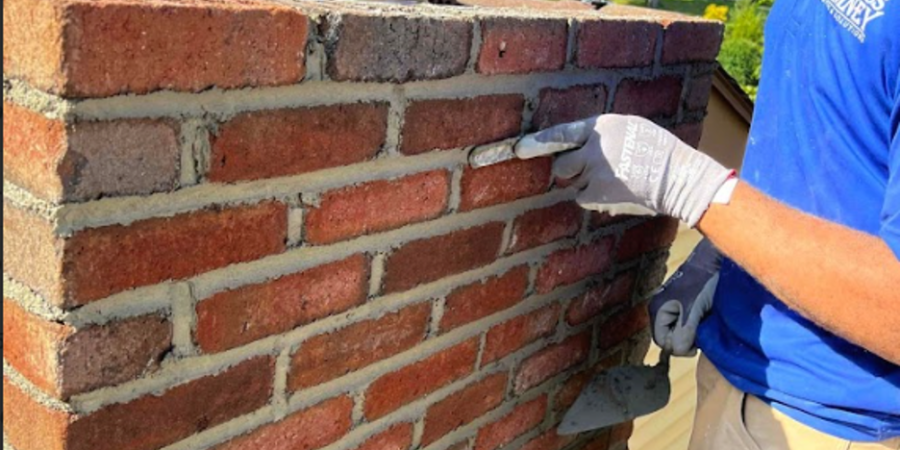
An often-overlooked part of regular property maintenance, the chimney stack is an essential structural element and a distinguishing feature of innumerable properties in the UK. Its continual care is vitally essential due to its exposed position, high above the roofline, which exposes it to the full force of the unpredictable British weather. Chimney repointing is the primary procedure that guarantees the chimney’s long-term health and, by implication, the property’s integrity. This extensive process include replacing the mortar joints between the chimney’s bricks or stones to stop water from getting in and decaying the structure, which can cause expensive and serious damage.
Because of the materials used, chimney repointing is an ongoing necessity. Masonry relies on mortar, a binding substance that is purposefully softer and more porous than bricks. The mortar can serve as a substitute for the more expensive and harder masonry units by absorbing the majority of the stress and moisture caused by the weather. But the endless cycle of precipitation, freezing, and thawing wears down the mortar over time. As it breaks down and falls out, it creates spaces between the bricks. Now is the time when expert chimney repointing becomes an absolute must for upkeep of the house. If you skip out on basic upkeep, you could be inviting structural issues that go well beyond the chimney.
Effective chimney repointing can reduce the risk of water damage, which is one of the main hazards. A cohesive barrier against precipitation can be formed when the mortar joints are sound and completely undamaged. When the mortar breaks down and allows water to seep into the chimney, the problem becomes much worse. This level of moisture saturation leads to a multitude of issues. In the short term, it can cause moist spots and discolouration on the inside walls and ceilings close to the chimney or fireplace. Most importantly, prolonged exposure to cold temperatures eventually freezes this collected water. The ‘freeze-thaw cycle’ occurs when water freezes and then expands, putting tremendous pressure on the nearby stonework. The entire stack can become unstable as a result of this pressure, which can widen fissures, spall or flake off the bricks’ faces, and more. In order to prevent this damaging process, chimney repointing must be done promptly.
In addition, chimney repointing keeps the mortar joints in good repair, which is essential to the structural integrity of the chimney as a whole. Masonry relies on the combined power and cohesion of its individual parts to provide its structural integrity. The chimney’s capacity to support loads is diminished when the mortar is either lacking or weak. The stack can start to tilt or sway, making it even more susceptible because of its height and exposure. When a chimney is in really bad shape, it can collapse, which is quite dangerous for everyone inside and outside the building and can ruin the roof below. To restore the stack’s monolithic strength and make sure the chimney can resist high winds and the dynamic loads caused by the property’s movement and the elements, a chimney repointing job is necessary.
The significance of using the right type of mortar is a sometimes misunderstood part of chimney repointing. No ordinary modern cement blend will do for this job. Historically, lime-based mortars were used to build chimneys, particularly on older UK homes. The chimney construction can “breathe” thanks to these mortars because they are vapour-permeable. When chimney repointing a historic building, using a modern, dense, non-porous cement mortar might hasten degradation. Because water can’t drain through the joints because of the strong cement, it has to go through the softer brickwork, which causes the bricks to crumble and spall quickly. Professional chimney repointing techniques include analysing the current material and choosing a mortar mix that is either structurally compatible, historically relevant, or sensitive to the existing structure. This is essential for the masonry’s long-term health.
The roof and attic are additionally protected by chimney repointing. If the chimney is damaged, the rain can still get in via the cracks. As the water moves down the flue liner or the chimney breast, it can eventually find its way to the roof timbers, particularly at the point where the chimney penetrates the roof material. Failure to resolve this leakage will allow wood rot and fungal growth to flourish, endangering the rafters, purlins, and ceiling joists in the vicinity of the penetration and their structural integrity. Avoiding costly repairs that extend beyond the brickwork itself, chimney repointing indirectly protects the roof’s timber structure by creating a completely sealed and strong outside shell.
Maintaining the value of a property is just one more important reason to get a professional chimney repointing. Professional property inspectors are less likely to find problems with a well-maintained home that has a physically solid chimney. Major masonry repair needs that go unaddressed might become a bargaining point or perhaps a deal-breaker if not addressed promptly. A homeowner can protect their asset by investing in chimney repointing in advance, preventing the depreciation that comes with evident structural faults and the impending expense of significant restoration work. A well-maintained home will have a chimney that is clean, well-pointed, and structurally solid.
In and of itself, chimney repointing is a meticulous process that calls for expertise, accuracy, and a commitment to safety. First, the old, decaying mortar joints are rake-out to a uniform depth, removing any loose material to make sure the new mortar has a clean surface to connect with. Since the new pointing to failure will be the result of inadequate preparation, this step is perhaps the most important. Next, make sure the new mortar cures properly by cleaning the masonry and dampening the joints appropriately to limit the suction rate of the bricks. The last step is to apply the new mortar mixture to the junction, pressing it firmly. Then, to finish, use a weather-struck profile or something similar to direct water away from the joint. The key to a long-lasting repair is a thorough approach to chimney repointing.
At its core, chimney repointing is an essential component of preventive maintenance for any structure that features a brick chimney; it goes well beyond being just an ornamental fix. Maintaining the structural integrity and watertightness of the chimney stack is its principal function in protecting it from the omnipresent forces of nature. A strong chimney repointing regimen has incalculable advantages, such as preserving the property’s market value and protecting the roof timbers from damaging freeze-thaw cycles and wood rot. Homeowners protect their valuable investment from the elements and the wear and tear of time by treating the mortar joints with the same level of care and attention as they would any other part of the building. Regular inspection and chimney repointing are essential for the long-term integrity of the British home.