





When it comes to kitchen appliances, many people assume that domestic and professional options are largely interchangeable. However, the reality is very different. There is a major difference between home appliances and commercial catering equipment, notably with regard to the performance, durability, and safety of the former. It is necessary for firms that operate in the hospitality sector in the United Kingdom to have a thorough awareness of these variations in order to guarantee efficiency, compliance, and long-term value.
However, commercial catering equipment is constructed to handle continuous operation in demanding conditions such as restaurants, cafés, and catering services. Domestic appliances are meant for occasional usage in the house, but commercial catering equipment is created to withstand such environments. This fundamental difference influences everything from design and materials to capacity and energy consumption.
Aspects of Performance and Power Output
One of the most noticeable differences between domestic appliances and commercial catering equipment is performance. The ovens, hobs, and fridge units that are used in homes are designed to withstand moderate, day-to-day use. In spite of the fact that they are adequate for making meals for a household, they are not built to deal with very high volume requirements.
In contrast, commercial catering equipment is engineered for continuous, heavy-duty use. Professional ovens are able to cook huge quantities of food in a short amount of time and with even heat distribution, whilst industrial hobs provide a higher heat output and more precise control. In busy kitchens, where speed and consistency are important to the quality of service, this level of performance is something that is absolutely necessary.
A residential oven, for instance, may have difficulty maintaining constant temperatures when it is used frequently throughout the day. On the other hand, commercial catering equipment is particularly built to withstand such demands without compromising performance.
Durability and Build Quality
For another important reason, commercial catering equipment distinguishes out from the competition in terms of durability. Generally speaking, lighter materials are used in the construction of domestic appliances in order to keep prices down and to accommodate the settings of homes. While adequate for occasional use, they are not built to endure the wear and tear of a professional kitchen.
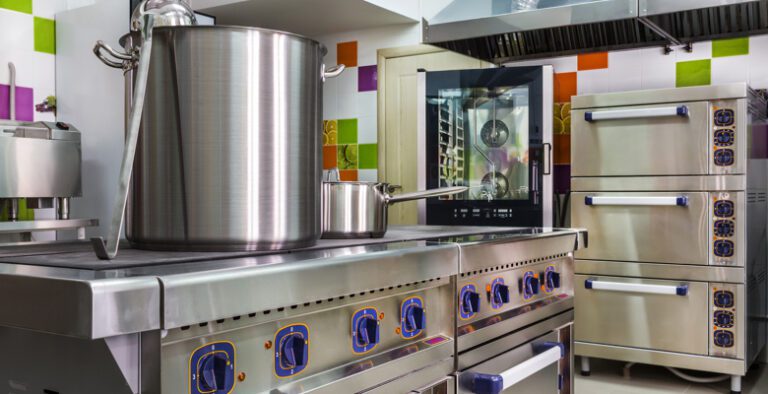
Commercial catering equipment, on the other hand, is made from robust materials such as stainless steel, which is resistant to corrosion, heat, and impact. Even when subjected to heavy daily usage, this guarantees its durability. In a commercial setting, equipment is often in operation for many hours each day, making durability a crucial factor.
A reduction in the likelihood of breakdowns and expensive replacements, both of which can cause disruptions to corporate operations, is achieved through the purchase of commercial catering equipment. Not only is dependability handy for any catering business, but it is also crucial for the firm.
Efficient operation and capacity
Another important distinction between commercial catering equipment and home appliances is the capacity of the aforementioned equipment. Domestic refrigerators, for instance, are designed to store food for a single household, whereas commercial refrigeration units are built to hold significantly larger quantities.
Commercial catering equipment allows businesses to prepare and store food at scale, which is vital for maintaining smooth operations during peak hours. A larger capacity also implies that there will be fewer disruptions, since the workers will not be required to continually resupply or produce another batch of goods.
To a large extent, capacity is connected to efficiency. The technology used in commercial catering is meant to optimise kitchen processes, which enables employees to operate more efficiently and within a shorter amount of time. This can have a direct impact on customer satisfaction, as quicker service often leads to better overall experiences.
Safety Standards and Regulations
In the UK, food safety and workplace regulations are strict, and commercial kitchens must comply with a range of standards. The equipment used in commercial catering is particularly built to suit these criteria, and it incorporates features that improve both safety and hygiene.
There is a possibility that home appliances may not meet the same requirements, which might create potential hazards in a professional environment. As an illustration, commercial catering equipment typically has sophisticated ventilation systems, temperature controls, and safety shut-off mechanisms, all of which are vital for the prevention of accidents.
In addition, commercial catering equipment is simpler to clean and maintain, which makes it easier for businesses to comply with requirements on cleanliness. When surfaces are smooth and there are few cracks, the chance of contamination is reduced, which makes it simpler to keep the environment clean and avoid any potential hazards.
What Are the Cost Implications of Energy Consumption?
While domestic appliances may appear more cost-effective initially, they are not always the most economical choice for a business. Electricity efficiency is a primary consideration in the design of commercial catering equipment, particularly when it is utilised on a large scale.
Because commercial catering equipment functions more well when it is being used extensively, it has the potential to minimise the overall amount of energy that is consumed in a busy kitchen. It is especially crucial for firms in the United Kingdom that are dealing with growing energy expenses. It is possible that the larger initial expenditure will be outweighed by the savings that are achieved by efficient equipment over time.
Additionally, the use of home appliances in a business setting might result in the need for frequent repairs and replacements, which eventually leads to an increase in operational expenses. Commercial catering equipment, with its superior durability and efficiency, offers better long-term value.
Suitability for Professional Environments
Suitability is yet another key factor to take into account. Appliances designed for residential usage are not designed for use in commercial settings, and utilising them in a professional environment might result in difficulties in terms of functionality. It is possible that they do not have the features that are necessary for the production of a big quantity of food, such as quick heating or broad cooking surfaces.
Commercial catering equipment is specifically designed for professional environments, taking into account the needs of chefs and kitchen staff. Features such as programmable settings, rapid cooling systems, and ergonomic designs make daily operations more manageable.
With regard to the cleaning of huge numbers of crockery, for instance, commercial dishwashers are able to do it in a swift and efficient manner, but household versions would have difficulty keeping up with the demand. This highlights why commercial catering equipment is essential for maintaining efficiency in busy kitchens.
Why the Difference Is Important for Companies to Consider
Having a clear understanding of the distinctions between commercial catering equipment and home appliances is not only a matter of technical detail; it has significant ramifications for the success of a business. The selection of the incorrect kind of machinery can result in inefficiency, a rise in expenses, and even problems with the regulatory authorities.
It is the responsibility of commercial catering equipment to guarantee that companies are able to function efficiently, fulfil the requirements of the law, and satisfy the expectations of their customers. It also supports scalability, allowing businesses to grow without constantly needing to upgrade their equipment.
A strategic choice that may have an impact on both a company’s profitability and its reputation is to make an investment in commercial catering equipment for hospitality enterprises situated in the United Kingdom. The ability to maintain consistent food quality is essential for establishing trust with customers, and reliable equipment helps maintain that quality.
Investing for the Long Term and the Growth of Businesses
While the initial cost of commercial catering equipment may be higher than domestic alternatives, it should be viewed as a long-term investment. In the long run, it is a decision that is more cost-effective than others because of its durability, efficiency, and performance benefits.
Businesses who make investments in commercial catering equipment are in a better position to expand their operations and meet the growing demand for specialised catering services. Whether you are expanding your production or establishing a new site, it is essential to have the appropriate equipment in place.
Additionally, commercial catering equipment frequently comes equipped with features that encourage creativity, which enables cooks to experiment with new methods and menus. This can help businesses stay competitive in an ever-evolving market.
Final Thoughts
It is important to keep in mind that there is a significant difference between home appliances and commercial catering equipment. It is particularly built to fulfil the requirements of professional kitchens in every way, from performance and durability to safety and efficiency, commercial catering equipment is designed to meet these requirements.
For any business in the UK catering or hospitality sector, choosing the right equipment is essential. Not only does it guarantee that day-to-day operations run smoothly, but it also helps to sustain development and success over the long term. Businesses are able to maintain compliance with industry standards, enhance productivity, and offer consistent quality when they make investments in commercial catering equipment.