





The methods by which experts in today’s fast-paced, digital world communicate and exchange data are changing at a dizzying rate. Once seen to be an indispensable networking tool, the old-fashioned paper business card is giving way to newer, more modern alternatives. Modern professionals that prioritise innovation, sustainability, and convenience are increasingly gravitating toward digital business card alternatives. The future of networking lies clearly in increasingly intelligent and flexible ways of exchanging contact details, as habits change in tandem with technology developments.
The unparalleled ease of use is a major selling point for switching to a digital business card alternative. In contrast to physical cards, which are prone to being misplaced, broken, or overlooked, digital versions may be instantly accessed on any device, such a smartphone. Because of this, experts may relax knowing they won’t be caught short at a critical moment or weighed down by a heavy stack of cards. The procedure is made smooth and efficient in any scenario with only a few taps to rapidly transmit contact data.
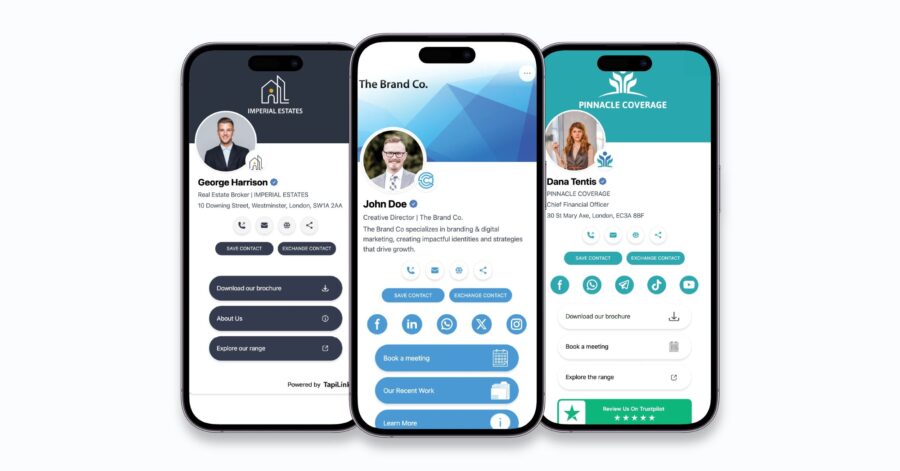
The capacity to hold a great deal more information than a conventional business card also constitutes a significant benefit of digital business card alternatives. Users are typically compelled to provide only the most essential data like a name, phone number, and email address when using physical cards due to size and design limitations. A digital format, on the other hand, opens up more possibilities for content creation, including social media accounts, portfolios, movies, and interactive aspects. This allows professionals to leave a deeper and more lasting impact while also providing recipients with a more engaging and immersive experience.
The development of digital business card alternatives is also being propelled by concerns about sustainability. Many people and companies are looking for methods to lessen their impact on the environment as they become more conscious of the problems facing the planet. Paper, ink, and energy are all used up in making traditional business cards, and most people throw them away after using them for a while. Experts can help create a greener networking strategy without sacrificing efficiency by moving to digital options, which completely remove this waste.
Another great thing about a digital business card alternative is the flexibility they provide. As soon as specifics change, the information on a physical card becomes obsolete, which can lead to misunderstanding and expensive reprints. In contrast, contact information may be rapidly updated with a digital solution, guaranteeing that all contacts have access to the most current and correct data. This flexibility is especially important in the modern corporate world, where positions, contact information, and branding can change at a moment’s notice.
A digital business card alternative is not only more convenient, but it also helps with professionalism and personal brand development. A user’s identity and ideals can be graphically conveyed through a personalised presentation. Compared to standard playing cards, the amount of customisation options, including colour schemes and multimedia components, is enormous. This degree of customisation may make people stand out in crowded fields by making an impression that is more substantial than that of a generic piece of paper.
A digital business card alternative is becoming more and more important as networking itself moves toward the digital age. The way professionals communicate has changed due to virtual meetings, web-based events, and telecommuting. It is usually not feasible, or at least not practicable, to exchange actual cards in these situations. A digital solution is well-suited to this setting, as it allows for immediate sharing via email, messaging apps, or video chats. Because of this, networking is always productive and fluid, no matter where you are.
An additional advantage of digital business card alternatives is their superior organization and security. Physical cards are easy to lose, and keeping track of a collection may be a pain. In contrast, digital cards are incredibly convenient for storing, sorting, and searching. Additional protection for sensitive data is provided by several systems with features like limited access and encryption. Without the mess of paper cards, this makes it easier for professionals to keep their contact lists structured and safe.
Another crucial factor to think about is how cost-effective it is. At first look, standard business cards might not seem like a big deal, but the design, printing, and reordering fees can quickly pile up. More cost-effective in the long term, digital business card alternatives usually just require setup once or have little continuing expenses. Freelancers and small enterprises that are just starting out have a lot on their plates, so this is a godsend for them.
Another feature that distinguishes digital business card alternatives from their physical counterparts is their interactive character. People may make a difference by offering an engaging, participatory experience rather than just transmitting data. From the card, the recipient may access a variety of content, including links, movies, and portfolios. This does double duty: it gets people’s attention and makes them more likely to engage in significant follow-up conversations, which in turn strengthens their professional connections.
The opportunity to monitor and evaluate interactions is yet another perk. There are digital business card alternatives that can track card views, link clicks, and recipient engagement. If professionals want to learn how to improve their networking methods and connect with their audience, this data might be priceless. Because they do not provide this kind of feedback, traditional cards are far less successful in terms of creating a demonstrable impact.
One digital business card alternative will become more important as technology progresses. These technologies are already quite effective, but new capabilities like improved personalisation, automatic follow-ups, and connection with contact management systems are taking them to the next level. Early adopters of this strategy may set themselves apart from the competition by displaying the flexibility and visionary attitude that are prized in today’s fast-paced business world.
Even with all these benefits, some people may prefer the tried-and-true method of using traditional playing cards. The advantages of digital business card alternatives, meanwhile, much exceed the sentimentality around paper-based approaches. This solution is perfect for modern professionals since it combines convenience, sustainability, and innovation all in one. The elimination of physical cards is becoming more than simply inevitable; it is needed, as more and more individuals use digital tools into their everyday lives.
Finally, the trend toward a digital business card alternative is indicative of more systemic shifts in the way we interact with one another in the modern era. In addition to improving personal branding and networking efficacy, it provides a more intelligent, efficient, and ecologically conscious method of sharing information. Adopting a digital strategy is now essential for professionals who want to remain relevant and competitive. The digital replacement to the classic business card has certainly taken over, but the former has had its day.