




In the modern manufacturing landscape, businesses across numerous industries require components that combine structural integrity with intricate geometrical designs. Aluminium casting has emerged as one of the most versatile and cost-effective methods for producing these complex parts, offering manufacturers the ability to create components that would be extremely difficult or prohibitively expensive to produce through other manufacturing processes. The inherent properties of aluminium, combined with advanced casting techniques, provide businesses with unparalleled opportunities to innovate and meet increasingly demanding specifications.
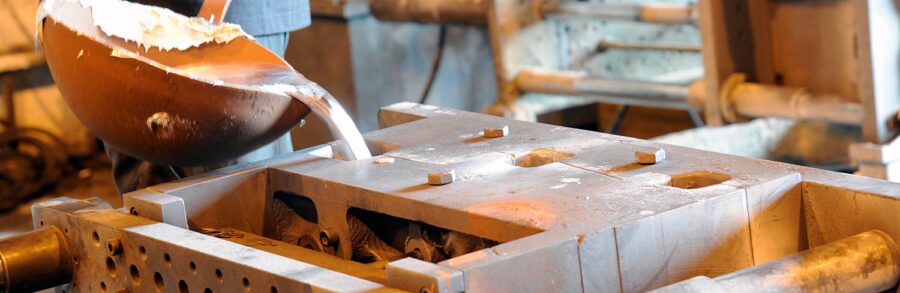
The fundamental advantage of aluminium casting lies in its ability to replicate intricate moulds with remarkable precision. When molten aluminium is poured into carefully designed moulds, it flows into every cavity, crevice, and detailed feature, solidifying into shapes that would require extensive machining if produced from solid stock material. This capability makes aluminium casting particularly valuable for businesses manufacturing automotive components, aerospace parts, electronic housings, and industrial equipment where complex internal passages, thin walls, and detailed external features are essential requirements.
Different aluminium casting methods offer distinct advantages depending on the complexity and volume requirements of the components being produced. Sand casting, one of the oldest forms of aluminium casting, remains popular for larger, more intricate parts where production volumes are relatively modest. The flexibility of sand moulds allows for the creation of complex internal cores and undercuts that would be challenging with other methods. Meanwhile, die casting provides exceptional precision for high-volume production runs, with aluminium casting in permanent steel moulds enabling businesses to achieve tight tolerances and excellent surface finishes on intricate components.
Investment casting, also known as lost-wax casting, represents another sophisticated aluminium casting technique that excels in producing components with extraordinary detail and complexity. This method involves creating a wax pattern of the desired component, coating it with ceramic material, and then melting away the wax to leave a precise mould cavity. The resulting aluminium casting can feature incredibly fine details, smooth surfaces, and complex geometries that include internal passages and interconnected chambers. Businesses in the medical device, aerospace, and precision engineering sectors frequently rely on investment aluminium casting to produce components that demand exceptional accuracy and intricate features.
The economic benefits of aluminium casting for producing complex components extend beyond the initial manufacturing process. Traditional machining of intricate parts from solid aluminium blocks generates substantial material waste, as metal is progressively removed to achieve the desired shape. In contrast, aluminium casting is a near-net-shape process, meaning the cast component emerges from the mould very close to its final dimensions. This characteristic minimises material waste and reduces subsequent machining requirements, translating into significant cost savings for businesses, particularly when producing components with complex internal features that would require expensive multi-axis machining operations.
Modern aluminium casting technologies have evolved considerably, incorporating computer-aided design and simulation software that allows engineers to optimise component designs before any physical moulds are created. These digital tools enable businesses to predict how molten aluminium will flow through the mould cavity, identify potential defects such as porosity or incomplete filling, and refine designs to ensure successful casting of even the most intricate geometries. This predictive capability has transformed aluminium casting from a somewhat empirical craft into a highly controlled manufacturing science, giving businesses confidence when developing complex components with demanding performance requirements.
The metallurgical versatility available through aluminium casting further enhances its suitability for complex component production. Different aluminium alloys can be selected based on specific performance requirements, with casting alloys formulated to provide excellent fluidity for filling intricate mould details whilst maintaining desirable mechanical properties in the finished component. Some aluminium casting alloys offer superior strength-to-weight ratios, others provide enhanced corrosion resistance, and specific formulations deliver excellent thermal or electrical conductivity. This material flexibility allows businesses to optimise not only the geometry but also the functional properties of their complex components.
Heat treatment processes applied after aluminium casting can further refine the mechanical properties of intricate components, providing businesses with additional control over final part performance. Solution heat treatment followed by artificial ageing can significantly increase the strength of cast aluminium components without altering their complex geometries. This capability is particularly valuable when producing lightweight structural components with intricate reinforcement features, where maximising strength whilst minimising weight is paramount. The combination of shape complexity through aluminium casting and enhanced properties through heat treatment enables businesses to develop components that push the boundaries of what is achievable with alternative manufacturing methods.
The scalability of aluminium casting methods provides businesses with flexible production options regardless of whether they require prototype quantities or millions of identical complex components. Low-pressure aluminium casting and gravity casting techniques work well for small to medium production runs, offering good economics without requiring the substantial tooling investment associated with high-pressure die casting. As production volumes increase, businesses can transition to more automated aluminium casting processes that maintain the same component complexity whilst dramatically improving production rates and unit cost efficiency. This scalability ensures that companies can develop intricate aluminium components without being locked into inappropriate manufacturing volumes.
Quality control capabilities in modern aluminium casting facilities have advanced significantly, with non-destructive testing methods enabling comprehensive inspection of complex internal features without damaging components. X-ray radiography and computed tomography scanning allow businesses to verify the integrity of intricate internal passages, confirm the absence of porosity in critical areas, and ensure that complex aluminium casting meets specification throughout its entire volume, not just on accessible surfaces. These inspection capabilities provide confidence when producing safety-critical components with complex internal geometries where traditional inspection methods would be inadequate.
Environmental considerations increasingly influence manufacturing decisions, and aluminium casting offers sustainability advantages when producing complex components. Aluminium’s excellent recyclability means that scrap material generated during aluminium casting operations can be remelted and reused without degradation of material properties. Furthermore, the energy required to recycle aluminium is only a fraction of that needed to produce primary aluminium from ore, making aluminium casting with recycled content an environmentally responsible choice. For businesses committed to reducing their environmental footprint whilst manufacturing intricate components, aluminium casting presents a compelling combination of technical capability and ecological responsibility.
The integration of aluminium casting with complementary manufacturing processes enables businesses to achieve component complexities that would be impossible with casting alone. Hybrid approaches that combine aluminium casting for the primary structure with subsequent machining for precise fitting surfaces, threaded features, or tight-tolerance bores deliver optimal results for many applications. Similarly, cast aluminium components can be joined through welding, adhesive bonding, or mechanical fastening to create assemblies with remarkable complexity and functionality. This flexibility allows businesses to leverage the strengths of aluminium casting whilst incorporating other processes where they provide specific advantages.
Looking towards the future, aluminium casting methods continue to evolve with advances in additive manufacturing influencing mould production and enabling even more complex geometries. Three-dimensional printed sand moulds and cores permit the creation of internal features and geometries that would be impossible with conventional mould-making techniques, expanding the boundaries of what businesses can achieve through aluminium casting. These innovations promise to make aluminium casting even more valuable for producing the next generation of complex components across industries ranging from renewable energy to advanced transportation systems.
In conclusion, aluminium casting stands as an indispensable manufacturing method for businesses requiring complex and intricate components. The combination of design flexibility, material versatility, economic efficiency, and scalability makes aluminium casting the preferred choice for countless applications where component complexity is essential. As technologies continue to advance and market demands for sophisticated components intensify, aluminium casting methods will undoubtedly remain at the forefront of manufacturing innovation, enabling businesses to transform ambitious designs into physical reality with precision, reliability, and commercial viability.