





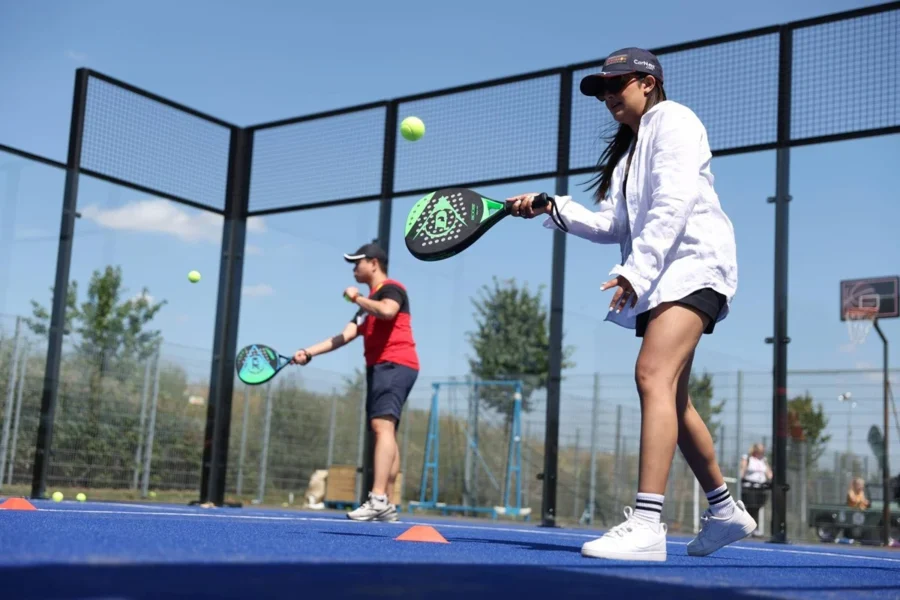
There was a time—not so long ago—when finding a good coach for any racket sport required putting your name on a club noticeboard or asking around in the locker room. Padel, despite its quick growth, initially followed the same analogue path. However, as the sport spread throughout Europe, the systems that support it evolved at the same rate. Today, the way players interact with coaches reflects as much on modern sports as the game itself.
Padel’s expansion is no longer an anecdote. According to the International Padel Federation, there are currently over 25 million players worldwide, with Europe accounting for a sizable portion. Spain alone has over 20,000 courts, while nations such as Sweden, Italy, and the Netherlands have experienced spectacular expansion in the previous five years. With the growth has come a demand for structured, accessible instruction.
That’s where technology has come in.
The Transition From Local Networks to Digital Discovery
Geographic and visibility constraints sometimes hampered teaching chances in conventional club environments. A player’s options were limited to who happened to be linked with their local club. Coaches, in turn, depended mainly on word-of-mouth or existing memberships to grow their clientele.
These limitations have been surreptitiously eliminated by digital platforms.
Players may now browse coaching profiles, compare experience levels, read reviews, and schedule sessions without ever entering a clubhouse. This is consistent with what we’ve seen in fitness, where personal trainers have developed entire companies using apps and marketplaces rather than gym employment.
Padel has followed suit. The emergence of internet booking platforms has added a level of openness and flexibility that benefits both parties. Players get options, while coaches gain visibility.
The rise of booking platforms for padel, like Padel Trainer, reflects a broader trend of digital-first coaching in racket sports. The emphasis has shifted from availability to discoverability and personal branding.
Coaching is a profession, not a side role.
One of the most intriguing trends is how technology is helping to rethink coaching itself. Padel coaching was traditionally a secondary duty at many European clubs, performed by ex-players or club staff in addition to other tasks. Today, it’s becoming more viable as a single career.
Digital tools play an important part in this transformation. Coaches can use a centralised system to manage appointments, track sessions, and accept payments, eliminating administrative friction. More crucially, they can establish an internet presence that transcends a single club.
I recently spoke with a coach in Rotterdam who went from part-time tennis instruction to full-time padel coaching in two years. His turning moment was not a certification or a club deal; it was visibility. He broadened his reach by setting up an online profile and accepting appointments through a website. Within months, he was coaching players from several clubs and leading group clinics for corporate clients.
That level of flexibility would have been tough to attain using standard club structures alone.
Data, Feedback, and The Modern Player
Technology is changing not only how sessions are scheduled, but also what happens on the court.
Players are becoming accustomed to feedback loops in other parts of their lives, such as health trackers and language learning programs. Coaches are beginning to reflect this expectation. Video analysis, performance tracking, and planned lesson plans are becoming more popular, even among amateurs.
Padel is especially well adapted to this progression. Its small court size and tactical nature make it perfect for video analysis and situational coaching. A 60-minute session can be recorded, evaluated, and reviewed to provide long-term value beyond the present lesson.
This is consistent with broader trends in sports participation. According to a 2023 research by Playtomic, Europe’s largest padel booking platform, more over 60% of regular players attend at least one coaching session per year, a figure that is expected to increase as the sport evolves. The expectation has shifted from casual play to structured improvement.
Technology facilitates the transition by making coaching more accessible and measurable.
The Social Layer: Community Still Matters.
Despite all the hype about computers and booking systems, padel remains an intrinsically social sport. Doubles play, club evenings, and informal competitions are at the heart of its popularity.
What’s remarkable is how digital platforms are augmenting, rather than eliminating, the social layer. Many now include tools that enable players to discover partners, join matches, and connect with people of a similar skill level. Coaching, in this environment, becomes a component of a larger ecosystem rather than a stand-alone service.
A excellent illustration is how beginners get into the sport. Instead of relying entirely on friends or coworkers, new players can find nearby trainers, schedule introductory lessons, and immediately join established playing communities. The barrier to admission is lower, and the learning curve is less daunting.
One of the reasons for padel’s success in Europe is its hybrid strategy, which combines internet discovery with in-person engagement.
What Does This Mean for the Future of Grassroots Sport
Padel’s trajectory provides a glimpse into the future of grassroots sports in general. As involvement increases, the supporting infrastructure must keep up. Technology provides the capabilities to accomplish this without necessitating enormous physical expansion.
Clubs can function more efficiently, coaches can create long-term careers, and players can receive higher-quality instruction. It’s a feedback loop that promotes growth.
There are, of course, challenges. Not all coaches are equally comfortable using digital tools, and there is a risk of hyper-standardization if platforms prioritise analytics over human interaction. However, in most cases, the benefits outweigh the drawbacks.
The goal is balance—using technology to enhance, not replace, the human factors that make sport so appealing in the first place.
Conclusion: A More Connected Game.
Padel’s growth in Europe is more than just courts and clubs; it’s about connectivity. The sport has adopted a format in which players, coaches, and communities are connected via digital technology, making participation easier and more rewarding.
For players, this means more options and easier access to experts. For coaches, this implies new opportunities to advance their careers. It also lays the groundwork for the sport’s future growth while maintaining its social essence.
Handwritten booking sheets are still used in some smaller clubs, although they are no longer the norm. In their place is a more dynamic and accessible method to interact with the game.
And, if Padel’s trajectory is any indication, this is just the beginning.